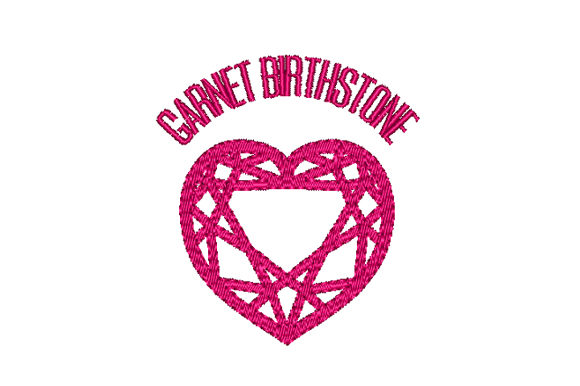
Garnet Birthstone Faceted Heart
A January Birthday Design That Feels Like a Quiet Celebration
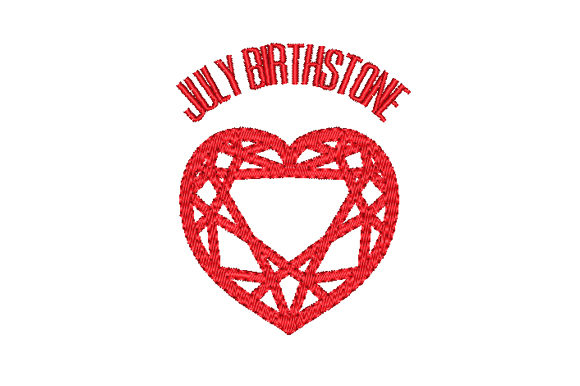
When I opened the Garnet Birthstone Faceted Heart embroidery file for the first time, what struck me wasn’t flashiness—it was quiet intention. The faceted heart shape reads as both delicate and grounded, with clean angular facets that suggest light catching a real gemstone—not cartoonish, not overly ornate, but thoughtful. “Garnet Birthstone” sits cleanly above it in a balanced, slightly refined sans-serif. This isn’t a design shouting for attention; it’s one that earns it through subtlety and sincerity. It feels like something you’d stitch onto a baby’s onesie for a January arrival—or embroider on a linen tea towel gifted to a friend turning 40. It leans into warmth without leaning into cliché.
Where It Lives Best: Real Projects, Not Just Mockups
Last week, I used Garnet Birthstone Faceted Heart on a natural cotton tote bag for a small-batch holiday order. The result? Crisp, confident, and instantly legible at arm’s length—no squinting, no confusion about the meaning. That clarity matters when your customer is scrolling through an Etsy listing on their phone. I’ve also stitched it on midweight French terry sweatshirts (for teen and adult clients) and soft organic cotton burp cloths (for baby registries). In each case, the design held its shape and readability because the lettering isn’t too fine, the heart isn’t overly dense, and the spacing between elements gives breathing room—even at 3.5 inches wide.
It shines brightest on structured-but-soft surfaces: aprons, pillow covers, kitchen towels, and unstructured caps. On a curved cap front, I resized it to 2.75" wide and added light tear-away stabilizer underneath—no puckering, no distortion. As a standalone embroidered patch? Yes, especially if heat-sealed onto denim jackets or canvas backpacks. Its symmetry and centered layout make it forgiving for alignment, which saves time during production runs.
Where to Pause—and Test First
Don’t assume it’s foolproof on every fabric. I learned this the hard way on a lightweight rayon challis blouse: the satin-stitched facets blurred slightly where thread tension met drape. Thin fabrics need extra stabilizer support—cutaway or hybrid works better than tear-away alone. And while the design isn’t ultra-dense, it does rely on smooth fill stitches inside the heart. On textured fabrics like bouclé or heavily brushed fleece, those facets can lose definition unless you adjust top tension or use a finer needle (75/11).
Stretchy knits? Proceed with caution. I tested it on a ribbed cotton blend tee and found the “Garnet Birthstone” text stayed sharp, but the heart’s outer edge softened just enough to feel less precise. For custom apparel on stretch, consider adding a light fusible backing *before* hooping—or reserve this design for stable knits like pique or interlock.
Dark fabrics demand thoughtful thread choices. Garnet red thread looks rich on navy or charcoal—but only if your machine handles color transitions smoothly. I recommend testing the full design in black-and-white mockups first to assess contrast before committing to final thread colors. Also: avoid placing it near seams, darts, or curved hems unless you’ve verified hoop clearance. The design’s clean geometry doesn’t forgive distortion.
What It Adds—Beyond Stitch Count
This isn’t just another machine embroidery design. It carries emotional weight without feeling sentimental. Customers recognize “Garnet” and “January” instantly—no explanation needed. That recognition builds trust, especially for Etsy sellers offering personalized gifts. When someone orders a custom embroidered pillow cover with Garnet Birthstone Faceted Heart, they’re not buying decoration—they’re buying meaning made tangible. That elevates perceived value, supports premium pricing, and reinforces brand consistency for boutique shops focused on intentional, life-celebrating goods.
For craft businesses, it’s versatile enough to slot into multiple product lines: nursery decor (stitched on muslin wall hangings), holiday embroidery (paired with subtle gold thread for New Year’s gifting), or even wedding favors (mini linen sachets with the design centered). Its restrained elegance avoids dating quickly—unlike trend-driven motifs, this feels timeless next to heirloom-quality handmade products.
Designer Notes You’ll Actually Use
- Always test first—on scrap fabric matching your final project’s weight, texture, and stretch.
- Check stitch density visually before stitching: zoom in on the facets and lettering in your embroidery software. Look for potential crowding in corners or thin connecting strokes.
- Confirm hoop size compatibility. If you’re working with smaller hoops (4x4”), verify the design fits comfortably—or plan for re-hooping.
- Inspect small details at actual stitch-out size: are the inner facets distinct? Does the “t” in “Birthstone” stand clear against background fabric?
- Test on both light and dark fabric backgrounds using printable mockups—this reveals contrast issues early.
- Use appropriate stabilizer: medium-weight cutaway for knits, tear-away for stable wovens, and fusible + tear-away for lightweight silks or linens.
- Verify licensing terms before selling finished items or bundling the Garnet Birthstone Faceted Heart as part of digital embroidery bundles. Commercial use isn’t automatic—even for birthstone-themed designs.
Final Thought: A Design That Serves the Maker and the Moment
The Garnet Birthstone Faceted Heart doesn’t try to be everything. It’s not oversized, not flashy, not layered with unnecessary flourishes. And that’s why it works so well in real life—on a child’s first birthday onesie, a grandmother’s favorite apron, or a limited-run tote for a January pop-up shop. It meets the moment with grace, not gimmick. For designers and makers who value clarity, craftsmanship, and quiet resonance over volume and velocity, this embroidery file earns its place in the working library—not as filler, but as a trusted tool for meaningful making.