Music Clef: A Designer’s Real-World Embroidery Review
First Impressions: Graceful, Not Gimmicky
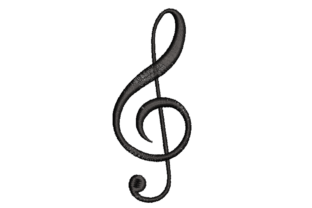
When I opened the Music Clef embroidery file, what struck me wasn’t flashiness—it was balance. The curve of the treble clef flows with quiet confidence, neither too slender nor overly bold. There’s no cluttered ornamentation, no unnecessary flourishes that would snag thread or blur on small-scale stitching. As a designer who’s stitched hundreds of music-themed pieces—from baby onesies to boutique aprons—I immediately sensed this isn’t just another decorative motif. It’s a machine embroidery design built for legibility, rhythm, and quiet sophistication.
Real Project Test: Embroidering a Linen Tote for a Local Music Studio
Last week, I used Music Clef on a natural linen tote bag—part of a small batch for a neighborhood piano studio’s summer recital gifts. I chose a medium-weight cutaway stabilizer and matte cotton thread in deep charcoal. On the tote’s slightly textured surface, the clef held its shape beautifully: the satin stitch curves stayed smooth, the inner fill remained even, and the negative space around the symbol gave it room to breathe. Customers didn’t just recognize the symbol—they paused to trace its curve with their fingers. That tactile resonance matters. It’s the difference between a logo that reads and one that *feels* intentional.
Where Music Clef Shines (and Where It Needs Care)
Music Clef excels on structured, stable surfaces:
- Custom apparel: Works cleanly on sweatshirt cuffs, t-shirt chest placements, and back yokes—especially when paired with minimal text like “Play On” or a monogram.
- Embroidered patch: Clean outer edges make it ideal for iron-on or sew-on patches on denim jackets, backpacks, or band merch.
- Baby embroidery: Its gentle scale and open form translate well to onesies and burp cloths—no tiny details that vanish after three washes.
- Kitchen and nursery decor: Looks warm and grounded on tea towels, pillow covers, and framed hoop art—never cutesy, never cold.
But be thoughtful where texture or tension is high:
- Avoid placing Music Clef directly over thick seams or curved cap crowns without testing hoop clearance first.
- On stretchy fabric (like jersey tees), use tear-away + light cutaway stabilizer—dense fill areas can pucker if unsupported.
- For dark fabric, skip metallic thread unless you’ve tested sheen retention; matte cotton gives richer contrast.
- Don’t force it into a tiny hoop (<4" diameter) without checking how the inner curve renders—some digitizing loses nuance at micro-scale.
What This Design Says About Your Brand—Before a Single Stitch
Your choice of Music Clef quietly communicates taste. It doesn’t scream “music lover”—it invites recognition. That subtlety builds trust: Etsy buyers scanning your shop notice craftsmanship before copy. Craft fair shoppers linger longer when embroidery feels considered—not mass-produced. And for small shop owners branding custom apparel or holiday embroidery bundles, Music Clef adds cohesion without limiting versatility. Pair it with a simple font for a wedding gift set, or let it stand alone on a minimalist apron for a music teacher’s boutique line.
Design Notes You’ll Actually Use (Not Just Read)
Here’s what I do before cutting fabric—or listing a finished product online:
- Test on scrap—same fabric, same stabilizer, same thread. Watch how the curve settles on textured linen vs. smooth poplin.
- Check stitch density visually in your software. If fill areas look overly heavy, reduce density by 5–8% for lightweight fabrics.
- Confirm hoop size. Even if the file fits a 5x7, does it leave breathing room? I prefer at least ½" margin for rehooping adjustments.
- Inspect corners and curves in zoom view—look for jump stitches near tight turns. Some files digitize those cleanly; others need manual cleanup.
- Mock it up in black and white first. Does the clef retain character without color? It should.
- Verify licensing. Since this is a digital embroidery file intended for commercial use, always confirm whether resale of finished items or redistribution of the file itself is permitted.
Why Music Clef Fits More Than Just “Music” Projects
Yes, it’s rooted in music—but its strength lies in abstraction. It’s not a cartoon treble clef with smiling notes. It’s clean, scalable, and emotionally neutral enough to work across contexts: a subtle accent on a chef’s apron (“Composing Flavors”), a grounding motif on a therapist’s waiting-room pillow (“Harmony Within”), or a refined touch on wedding napkins (“Our First Movement”). For digital product sellers, that flexibility makes Music Clef a smart addition to themed bundles—paired with sheet music borders, minimalist staff lines, or soft-tone palettes.
A Final Thought for Makers Who Value Integrity Over Impulse
There are dozens of clef designs out there. What sets Music Clef apart isn’t novelty—it’s restraint. It respects the fabric it lands on, the machine that stitches it, and the person who receives it. Whether you’re an Etsy seller building a loyal customer base, a craft business owner curating meaningful merchandise, or a hobbyist stitching a personalized gift, this design supports your intention instead of competing with it. It doesn’t shout. It resonates. And in handmade product markets, that kind of quiet confidence is rare—and worth every stitch.